


Introduction
Efficient document management is crucial for maintaining productivity and collaboration. Microsoft Dynamics 365 Document Management is a powerful solution that seamlessly integrates with Microsoft Office 365 Document Management tools to streamline workflows. Setting up D365 Document Management can be accomplished in just a few minutes.
Definition of Dynamics Integration
Dynamics Integration is the creation of an interface between Dynamics as a CRM tool and a specialized document management system.
Purpose of a Dynamics Integration
Often, maintaining business relationships generates large volumes of customer-specific documents that need management, storage and archiving. Automated Dynamics 365 to SharePoint provisioning that create associated folders when new D365 entries are established prove much more efficient than manual maintenance. A Dynamics integration automates business processes around data management, allowing employees to focus on core business activities while various business scenarios can be mapped through the integration.
Why Integrate Dynamics 365 with SharePoint?
Integrating Dynamics 365 with SharePoint unlocks powerful synergy enhancing document management and collaboration. This integration allows users to store, manage, and share documents directly from Dynamics 365, streamlining workflows and improving accessibility. By leveraging SharePoint's robust document storage capabilities alongside Dynamics 365's CRM and ERP functionalities, teams ensure critical information remains accessible. This connection boosts productivity, fosters better communication across departments, and ultimately drives business success.
How to Avoid Common Pitfalls During Integration
When integrating these systems, ensure clear understanding of business requirements before starting. Inadequate planning leads to misalignment between systems. Involve key stakeholders early to gather insights and address concerns. Regular testing during development identifies issues before escalation. Provide comprehensive training so users become comfortable with the new system, maximizing integration benefits and achieving smooth implementation.
Microsoft's Out-of-the-Box Dynamics Integration
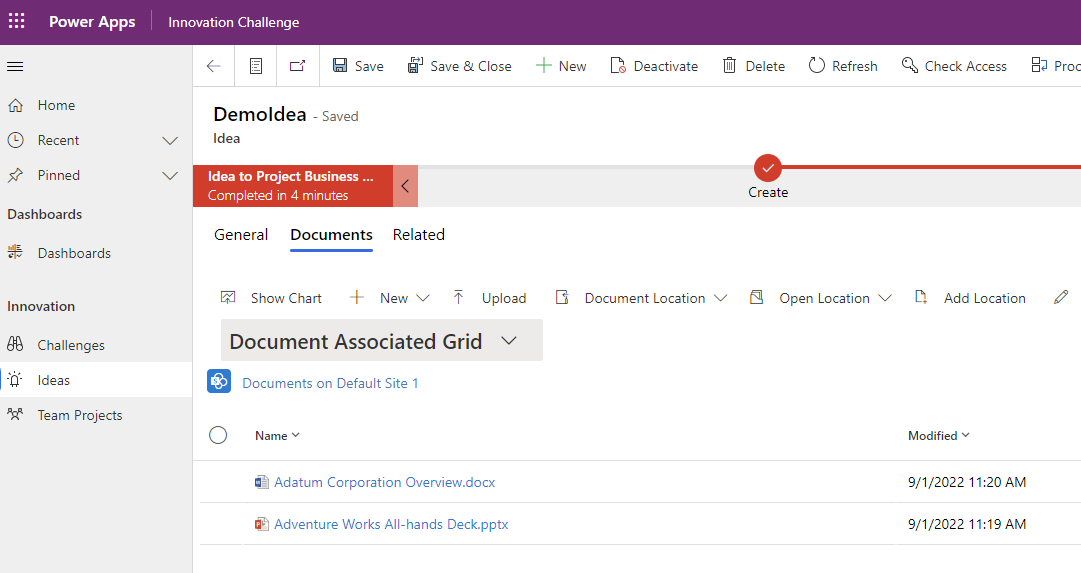
Microsoft recognizes the need for Dynamics integration. The standard SharePoint Dynamics Integration can be activated in D365 with minimal effort. After activation, an extra view displays documents linked to records. Documents can be uploaded, opened and edited directly via the Dynamics user interface in respective SharePoint folders.
Activating the Standard Integration
Step 1: Activate Server-Side SharePoint Integration
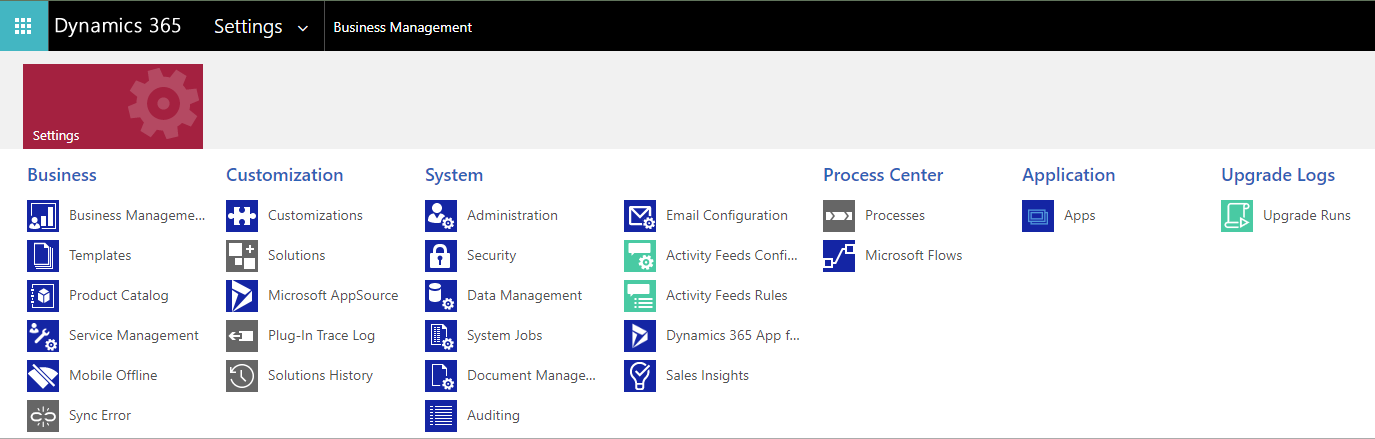
Go to your D365 interface, click the gear icon in the upper right corner, then select "Advanced Settings." Find "Document Management" and activate server-side SharePoint integration. You'll need the link to a SharePoint site collection where document storage will be structured. Ensure your SharePoint site collection is within the same Microsoft tenant as the Dynamics environment.
Step 2: Select SharePoint Location
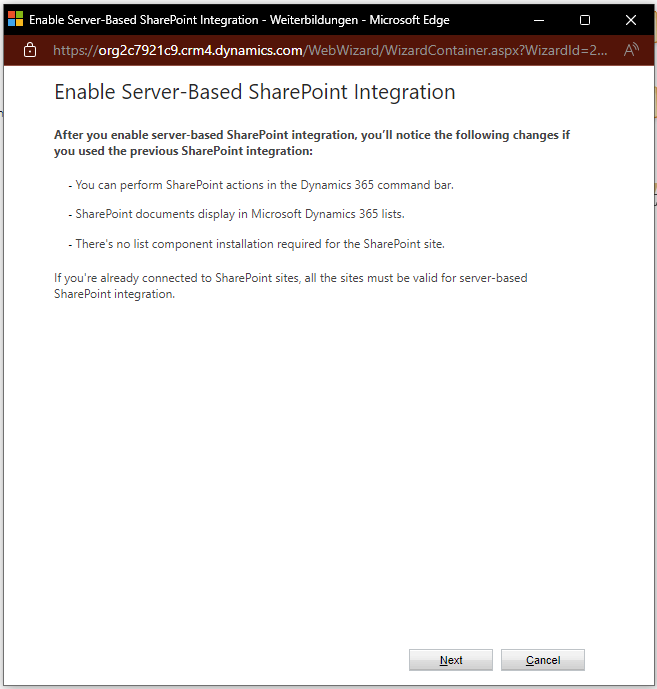
When the installation wizard opens, select where SharePoint sites are located. For cloud versions, select "Online."
Step 3: Enter SharePoint URL
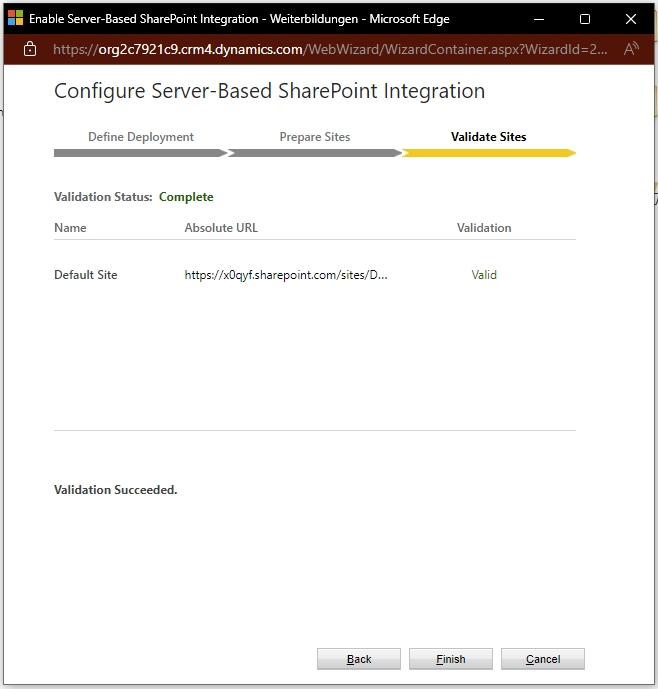
Enter the URL to your previously created SharePoint site collection. The wizard validates whether the specified site collection exists. If validation succeeds, close the window via "Finish" to activate server-based SharePoint integration.
Step 4: Configure Document Management Settings
Back on the Document Management overview, select "Document Management Settings." All Dynamics 365 entities are listed here. Some system entities are checked by default. Uncheck any you don't want enabled. The wizard will create separate document libraries for each hooked entity. Specify the same SharePoint Site Collection validated earlier.
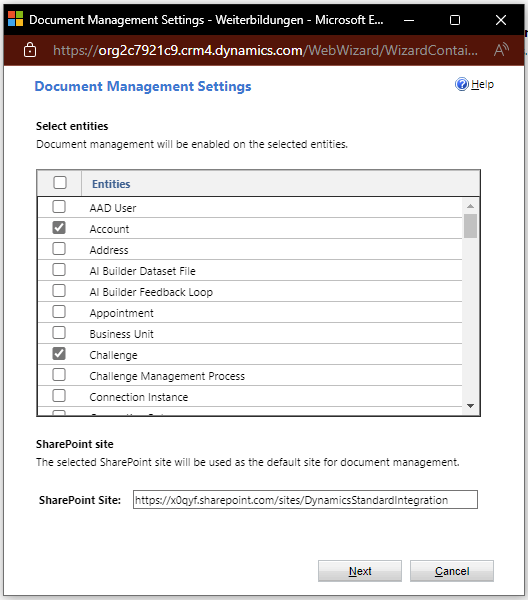
Step 5: Influence SharePoint Folder Structure
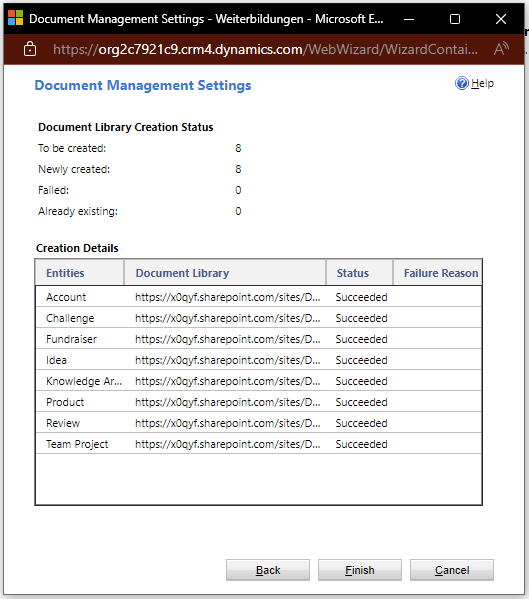
You can influence how SharePoint folders are organized. Out-of-the-box, Dynamics allows focusing on a particular entity. For example, selecting the accounts entity means all entities with account references will be created in libraries nested within the account's library.
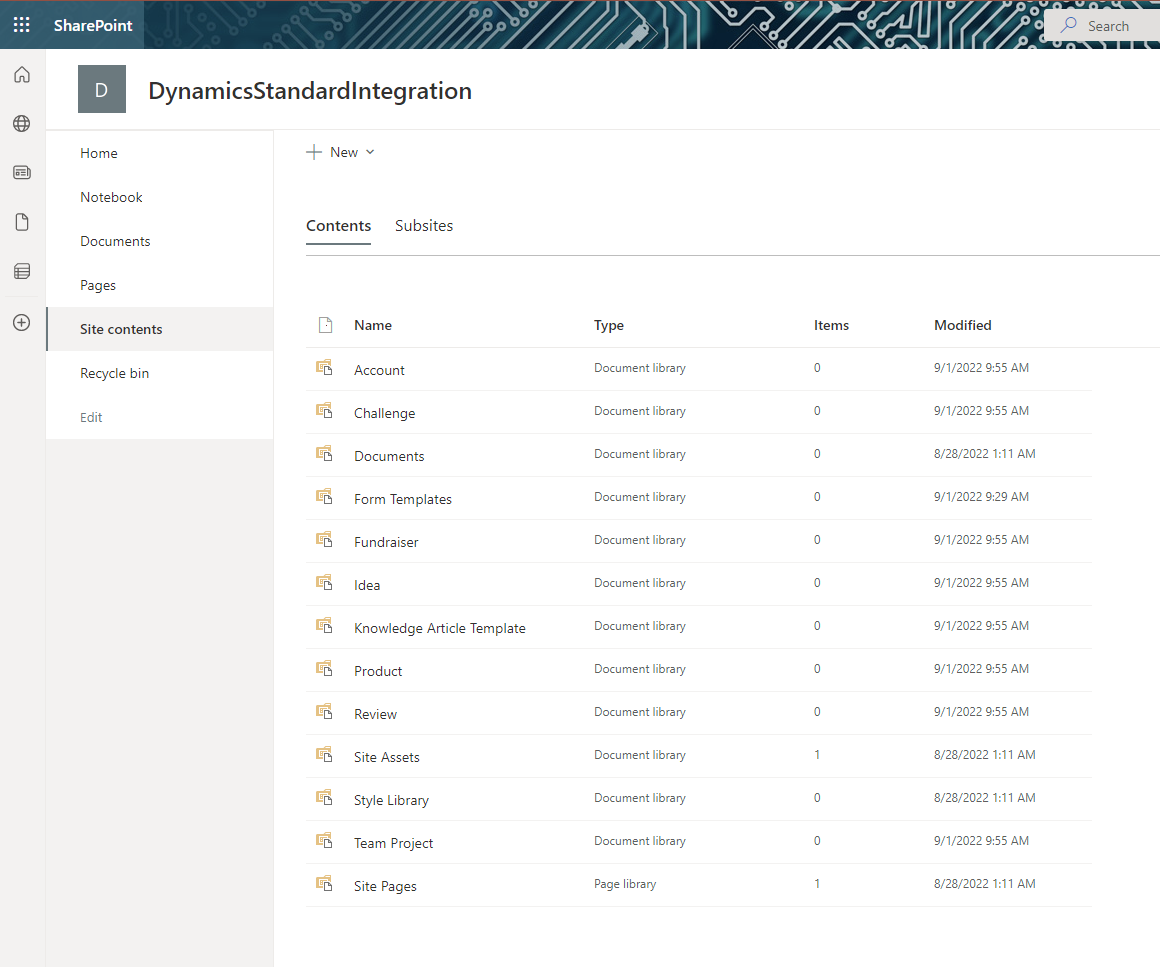
Step 6: Complete Library Creation
In the final step, the wizard creates desired libraries on your SharePoint site. Check the status field to confirm successful creation. After reloading the page, verify results directly on SharePoint under "Site Contents" where new libraries should appear.
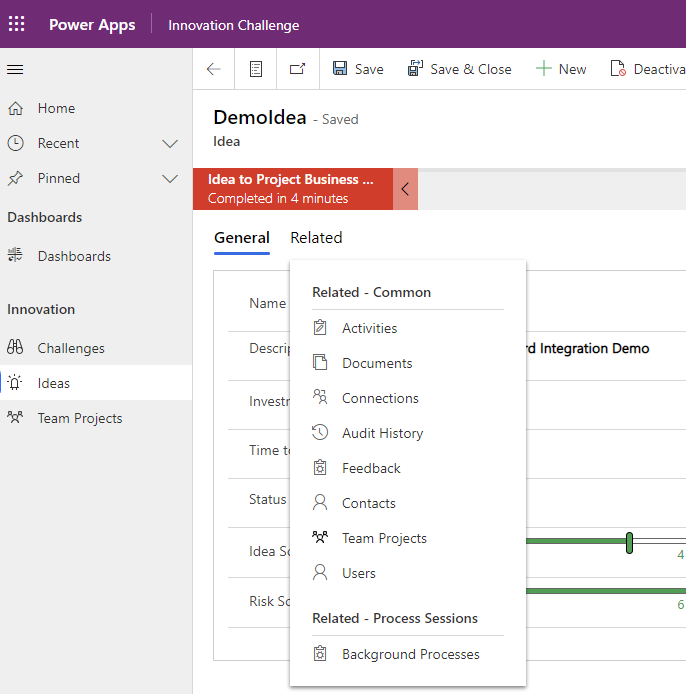
In D365, you should now see the "Documents" option for all entities where standard integration was activated. Click it to access the document grid view.
Is Everything Done After Activation?
Unfortunately, activating the Document Management feature isn't the complete solution. Before activation, review the 5 key building blocks of a Dynamics 365 and SharePoint integration solution for your specific needs.
Steps for Integrating Dynamics 365 with SharePoint
- Activate server-side SharePoint integration
- Select the SharePoint Type (Online | On-Premises)
- Check document management settings of Dynamics 365 entities
- Select entities for standard integration activation
- Select the folder structure
- Complete the wizard and check results
Conclusion
Setting up Microsoft Dynamics 365 Document Management is quick and transformative for organizations. By integrating Microsoft Office 365 Document Management capabilities, you enhance collaboration and streamline workflows effectively. With document management Dynamics 365, manage documents efficiently, ensuring teams access and share information seamlessly. Embracing D365 Document Management enables smoother operations and competitive advantage.
The guide recommends a system design and evaluation of the 5 most important key building blocks for Dynamics and SharePoint integration before you activate the Document Management feature of Dynamics 365.
Frequently asked questions about setting up Dynamics 365 Document Management
-
How do you activate SharePoint integration in Dynamics 365?
In the D365 interface, click the gear icon in the upper right, select Advanced Settings, then Document Management, and activate server-side SharePoint integration. You need the link to a SharePoint site collection within the same Microsoft tenant as the Dynamics environment. The installation wizard then guides you through selecting the SharePoint location, entering the URL, choosing entities, setting the folder structure, and creating the libraries.
-
What are the steps to set up Dynamics 365 Document Management?
The setup involves: activate server-side SharePoint integration, select the SharePoint type (Online or On-Premises), enter the URL to the SharePoint site collection, check the document management settings of the Dynamics 365 entities, select the entities for which standard integration is activated, choose the folder structure, and complete the wizard and check the results.
-
What is server-based SharePoint integration?
It is the standard SharePoint Dynamics integration, which creates an interface between Dynamics as a CRM tool and a specialized document management system. After activation, an extra view displays documents linked to records, and documents can be uploaded, opened, and edited directly via the Dynamics interface in the respective SharePoint folders. This guide is written for the Dynamics 365 and SharePoint Online integration.
-
Is everything done once the feature is activated?
No. Activating the Document Management feature is not the complete solution. Before activation, you should review the 5 key building blocks of a Dynamics 365 and SharePoint integration solution for your specific needs to avoid future problems - the guide recommends a system design and evaluation of those building blocks first.


