


Introduction
Organizations must determine whether to develop governance solutions internally or purchase third-party software. This decision requires careful evaluation of costs, competencies, staff availability, support needs, and ongoing development requirements.
What does a Microsoft Teams Governance Tool do?
A ready-made Microsoft Teams governance solution automates the management of team creation, operation, archiving, and deletion while controlling information architecture, member management, and information protection.
Are you trending towards developing a governance solution in-house?
Capacities
Organizations need sufficient IT department resources for implementation, maintenance, support, and further development. Staff workload on governance projects affects their availability for other initiatives and bug-fixing when Microsoft services change.
Skills
Successful development requires expertise across multiple technologies:
- Microsoft Azure (Web Apps, SQL Database, Storage Accounts, Azure Key Vault)
- Microsoft Azure AD Security
- Microsoft Power Platform
- Microsoft Teams
- Microsoft SharePoint (CSOM)
- PnP Provisioning Engine
- Graph API
Dependency on specific staff members creates scheduling challenges and recruitment difficulties.
Implementation Costs
Architectural errors during development can increase complexity and expenses significantly.
Are you trending towards buying a governance solution?
Speed
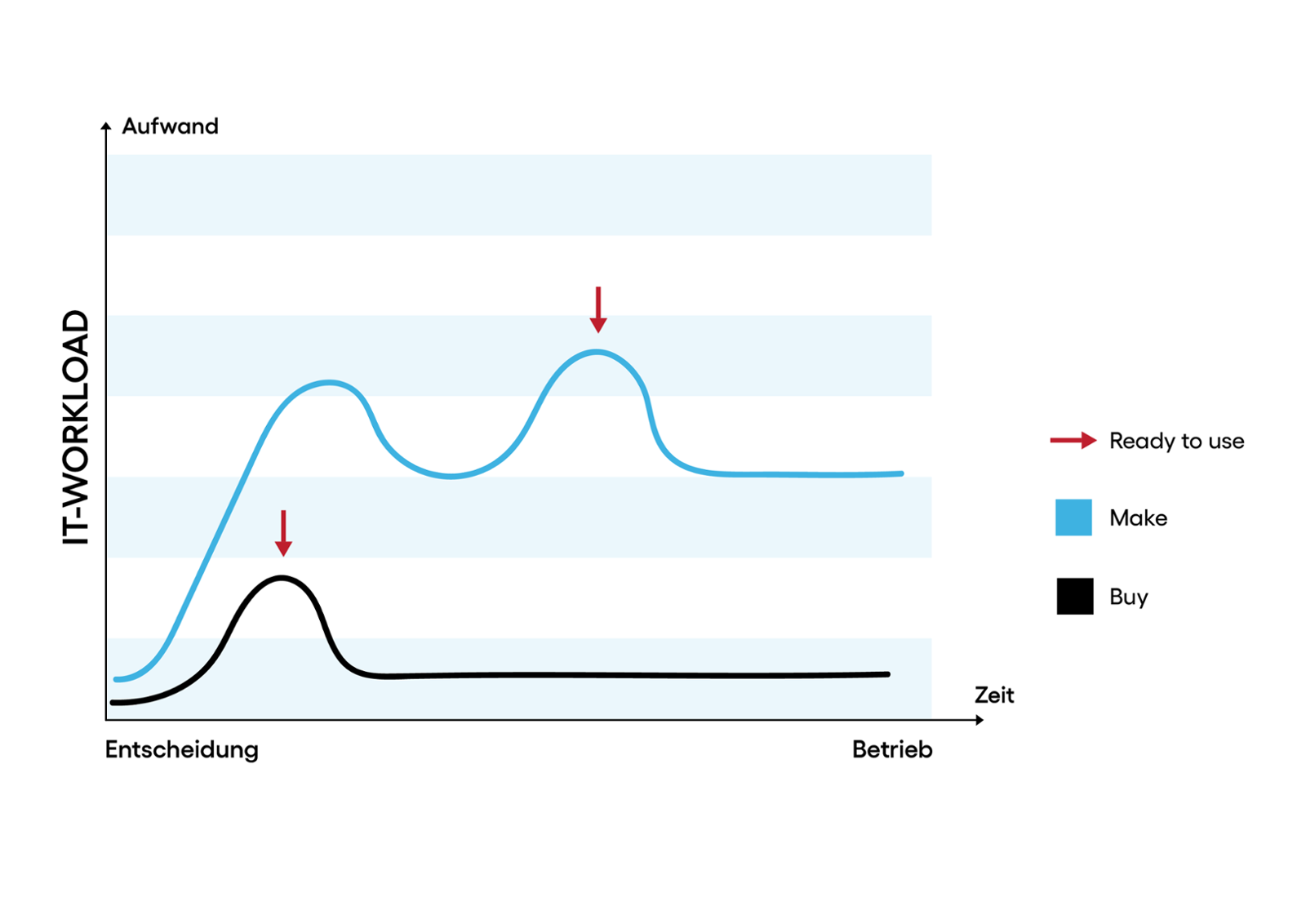
Purchasing enables faster rollout than internal development. Product manufacturers continuously improve solutions to accelerate implementation.
Required Know-How
Vendors design solutions for business user configuration, not requiring expert knowledge from end-users. This approach suits medium-sized organizations.
Future-Proof
As businesses grow, purchased Microsoft 365 Governance adapts to increasing complexity through continuous feature improvements and updates.
Outsourcing to Relieve Burden
Purchasing transfers support responsibility from internal IT to vendors, reducing employee workload.
The Advantages of Developing an MS Teams Governance Solution
- Feature customization aligned with exact requirements — Develop functionality matching specific business department needs with tailored user experiences
- Complete control over the solution — Self-developed solutions offer full control over modifications and extensions at any time
- No vendor dependence — Organizations determine feature prioritization and development speed independently
The Disadvantages of Developing an MS Teams Governance Solution
- Long development time — Implementation requires significantly more time than anticipated, especially for first-time projects. Unexpected failures impact timelines negatively.
- IT department dependency — Further development and bug-fixing create bottlenecks. Staff handle multiple projects simultaneously, causing delayed end-user support responses.
- Scalability difficulties — Proper architectural decisions during conception are critical. Future scaling becomes challenging. Losing specialized personnel creates resource bottlenecks.
- Ongoing cost of ownership — Organizations assume internal development costs less than purchasing but neglect employee operational expenses.
- Implementing new features — Governance projects require constant evolution. Wrong architectural decisions necessitate costly redesigns.
- Unpredictable project timelines — Success depends on team skills, availability, and experience. Microsoft service adjustments require corresponding solution modifications.
The Advantages of Buying a Microsoft Teams Governance Solution
- Fast rollout — Error-free deployment occurs quickly, making purchased solutions ideal for short-term governance project goals.
- High solution maturity — Products achieve maturity through multiple customer deployments, levels impossible to reach through internal development.
- Minimal IT involvement — Business departments maintain solutions designed for their configuration needs. IT departments only define corporate policies automated by the tool.
- Professional customer support — Expert support teams reduce ticket processing times and increase end-user satisfaction through Microsoft-recommended best practices.
- Tested usability — Products prioritize user experience across multiple customer environments.
- Scalability and resilience — Solutions designed for thousands of employees provide robust, scalable infrastructure.
The Disadvantages of Buying a Microsoft Teams Governance Solution
- Requirement mapping limitations — Product solutions may not cover 100% of organizational requirements; acceptance of 95% coverage becomes necessary.
- Product roadmap influence — Limited customer influence over vendor priorities creates vendor dependency, though some manufacturers prioritize customer-first approaches.
Criteria When Buying a Microsoft Teams Governance Solution
- No hidden costs — Align requirements with vendor offerings to avoid unexpected expenses.
- Solution architecture — Conduct security and technical reviews upfront. Mission-critical data storage requires thorough security validation before purchase.
- Flexibility — Evaluate configuration options through trial periods and vendor discussions.
- Product feature influence — Assess vendor openness to customer feedback and product improvement collaboration.
Conclusion
Organizations must balance internal development costs against time and IT workload against purchasing established solutions. Self-developed governance requires significant time and money with high IT burden. Established vendor solutions offer effective governance approaches with active support for Microsoft updates, enabling organizations to adapt requirements together with experienced providers.
Frequently asked questions about make or buy for governance tools
-
What does a Microsoft Teams governance tool do?
A Microsoft Teams governance tool automates the management of team creation, operation, archiving, and deletion while controlling information architecture, member management, and information protection.
-
What skills does building a governance tool in-house require?
Successful in-house development requires expertise across Microsoft Azure (Web Apps, SQL Database, Storage Accounts, Azure Key Vault), Azure AD Security, Microsoft Power Platform, Microsoft Teams, SharePoint (CSOM), the PnP Provisioning Engine, and the Graph API. Dependency on specific staff members creates scheduling challenges and recruitment difficulties.
-
What are the advantages of buying a governance solution instead of building one?
Buying enables a fast, error-free rollout, high solution maturity from multiple customer deployments, minimal IT involvement (business departments maintain, IT defines policies), professional customer support, tested usability, and scalability and resilience for thousands of employees. Building in-house instead means long development times, IT bottlenecks, scalability difficulties, and ongoing cost of ownership.
-
What criteria matter when choosing a governance tool?
Key criteria are: no hidden costs (align requirements with the vendor upfront), solution architecture (conduct security and technical reviews, especially for mission-critical data), flexibility (evaluate configuration options through trial periods), and product feature influence (assess how open the vendor is to customer feedback and product improvement collaboration).


